

Couples Therapy
for Pregnancy, Postpartum, Infertility, & Loss
Pregnancy, the postpartum period, infertility, and pregnancy loss can profoundly reshape a couple’s relationship. Even strong, deeply connected partners often find themselves struggling during these transitions—not because they’re doing something wrong, but because these seasons place extraordinary emotional, physical, and relational demands on both partners.
Couples therapy during this time offers a supportive space to slow down, reconnect, and learn how to face these challenges together rather than apart.
Serving Mount Juliet and greater Nashville, with online therapy across Tennessee, South Carolina, and Florida.
Couples Therapy During
Pregnancy & the Postpartum Period
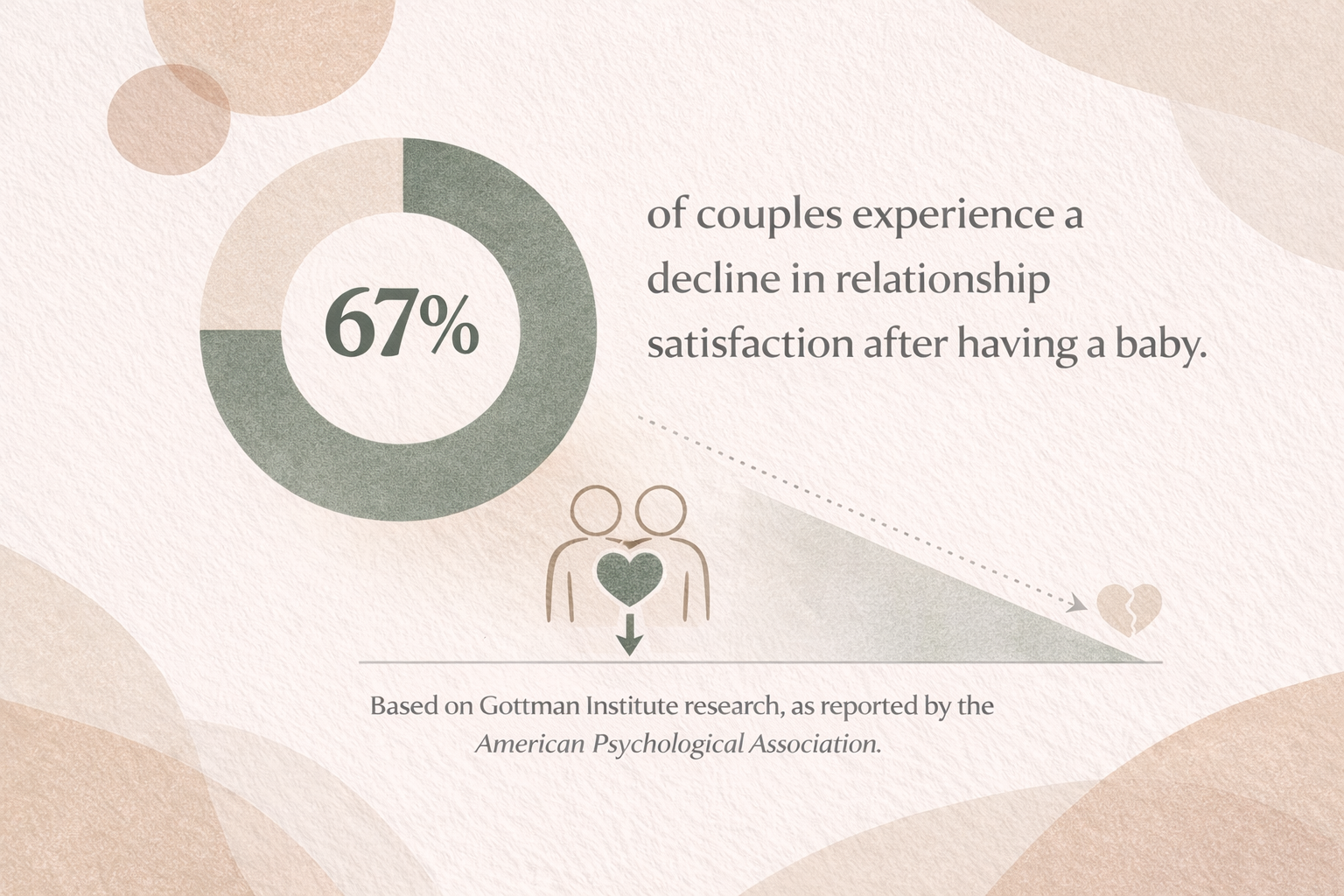
The transition into parenthood is one of the biggest relationship shifts a couple will ever experience. Research consistently shows a dip in relationship satisfaction for many couples after the birth of a baby—even in loving, committed partnerships. Lets look at some of the causes of this shift and how therapy can help.
This dip in satisfaction is not a personal or relational failure. It’s a predictable response to the intensity of early parenthood, where both partners are stretched physically and emotionally. In the sections below, we’ll explore common contributors to this shift—and how therapy can help couples reconnect, communicate more effectively, and feel like a team again.
-
Pregnancy and early parenting comes with intense demands. Sleep deprivation, dramatic hormone shifts, and 24 hour caregiving can leave both partners depleted. When energy is low, patience and emotional availability often suffer.
How therapy helps:
Couples therapy creates space to name overwhelm, find practical ways to support each other. -
Becoming a parent can alter how partners see themselves and each other. Long-held expectations about parenting, work, and partnership—often shaped by family of origin or culture—may surface or clash.
How therapy helps:
Therapy supports couples in exploring these shifts with curiosity rather than conflict, helping partners understand each other’s experiences and renegotiate roles in ways that feel sustainable and respectful. -
With a baby’s needs taking priority, couples often have less time and energy for emotional and physical intimacy. Many partners feel disconnected, lonely, or unsure how to reach each other again.
How therapy helps:
Couples therapy helps partners rebuild connection in realistic ways, address changes in desire without shame, and strengthen emotional closeness even during demanding seasons. -
Stress can make it harder to communicate clearly and kindly. Small misunderstandings may escalate more quickly, and unresolved tension can build over time.
How therapy helps:
Therapy provides tools for communicating needs, boundaries, and frustrations more effectively—especially when emotions are high and time is limited. -
Differences in parenting approaches, family involvement, or support systems can intensify conflict, particularly when couples are already stretched thin.
How therapy helps:
Couples therapy supports collaborative decision-making, boundary setting, and a stronger sense of being on the same team.
Experiencing these challenges does not mean your relationship is broken. It means you’re navigating one of the most demanding transitions a couple can face—and support can make a meaningful difference. If this resonates with you let’s talk!

Couples Therapy for Infertility,
Pregnancy Loss & Perinatal Diagnosis
Infertility, miscarriage, stillbirth, or a difficult perinatal diagnosis place a very different kind of strain on a relationship. These experiences often involve grief, uncertainty, medical trauma, and deeply personal differences in coping.
Couples therapy in this context looks different than postpartum work and is approached with particular care.
Navigating Infertility as a Couple
Many couples find this is one of the most isolating seasons of their relationship. Couples therapy may focus on helping partners:
Processing cycles of hope, disappointment, and loss
Reducing blame, guilt, or self-criticism
Supporting each other through medical decision-making
Staying connected when life feels “on hold”
Couple’s Therapy After
Miscarriage or Pregnancy Loss
Pregnancy loss affects each partner differently, and mismatched grieving styles can create distance. Therapy helps couples:
Validate different emotional responses to loss
Create space for grief without comparison
Honor the loss while moving forward together
Reconnect after trauma or emotional withdrawal
Walking through a Perinatal Diagnosis Together
Receiving a difficult or unexpected diagnosis during pregnancy can be overwhelming. Couples therapy supports:
Processing fear, grief, and uncertainty as a team
Making complex medical or ethical decisions together
Strengthening communication under intense stress
Preventing isolation when one partner feels they must “stay strong”
These experiences place unique strain on a relationship, but they don't have to be faced alone. Couples therapy offers a space to slow down, make sense of what's happening, and move forward with greater connection and understanding.
Is Couples Therapy Right for You?
Couples therapy may be helpful if you’re experiencing:
Increased conflict or emotional distance
Difficulty communicating needs or expectations
Strain related to pregnancy, postpartum changes, or fertility challenges
Feeling disconnected, overwhelmed, or misunderstood
You don’t have to navigate this alone.